The Science of First Impressions: How Design Shapes Trust in Seconds
In business, branding is often discussed as(Article Submission)
It is a process of submitting an article related to your website. More a visual exercise – logos, colors, typographyTypography is the art and technique of arranging letters to make written language legible, readable ... More, and layouts. But branding isn’t really about what people see.
It’s about what their brain feels before they even think.
At Sage Design Group Online, we approach branding from a deeper perspective: every brandA brand is a name, term, design, symbol or any other feature that identifies one seller's good or se... More interacts directly with the human nervous system. Long before customers analyze your services or compare pricing, their brains are asking one primal question:
“Is this safe, trustworthy, and worth my attention?”
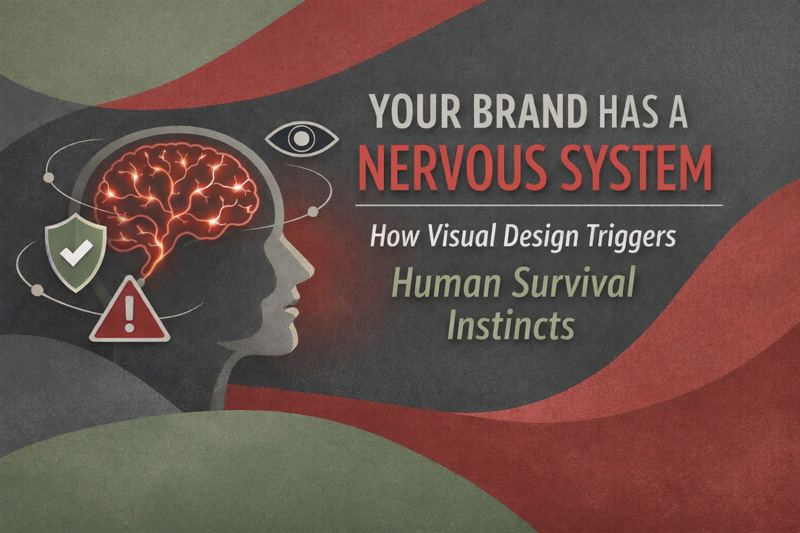
Branding, at its core, is neurological communication – a silent conversation between design and human survival instincts.
The Brain Decides Before Logic Begins
Neuroscience shows that humans process visual information in milliseconds. The brain’s threat-detection systems – developed for survival – activate before conscious reasoning.
This means customers don’t decide to trust your brandA brand is a name, term, design, symbol or any other feature that identifies one seller's good or se... More logically.
They feel trust first.
When someone visits your website or encounters your visual identity, their nervous system instantly evaluates:
- Is this organized or chaotic?
- Does this feel credible or risky?
- Is this professional or amateur?
- Should I stay – or leave?
At Sage Design Group Online, strategic design decisions are made with this reality in mind. Every visual element must communicate clarity and confidence before a single word is read.
Design as a Survival Signal
Humans evolved to interpret visual cues rapidly:
- Symmetry suggested health and stability.
- Patterns indicated predictability.
- Color signaled environmental meaning.
- Consistency implied reliability.
Modern branding activates these same instincts.
When design aligns with human perception, the brain relaxes and engagement increases. When design feels inconsistent or confusing, the brain senses uncertainty – and uncertainty triggers avoidance.
Poor design isn’t just unattractive. It creates subconscious discomfort.
Color: The Emotional Alarm System
Color communicates faster than language because it bypasses analytical thinking.
Through Sage Design Group Online’s work in color psychology and strategic branding, we consistently see how color influences perception at an emotional level:
- Warm tones increase alertness and urgency.
- Cooler tones reduce perceived risk and promote calm.
- Muted palettes signal sophistication and control.
- High contrastContrast, by definition, means to compare and contrast; to note the opposite natures, purposes, etc.... More demands attention and action.
These reactions shape how customers perceive professionalism, value, and trustworthiness – often without conscious awareness.
Color is not decoration. It is psychological positioning.
Visual Chaos Triggers Cognitive Threat
Imagine entering a space that feels disorganized and unpredictable. Your body(also known as HTML Body Element): The area of HTML code containing all of the page information, su... More subtly tenses, even without obvious danger.
The same reaction occurs online.
Brands unintentionally create stress responses through:
- inconsistent typographyTypography is the art and technique of arranging letters to make written language legible, readable ... More
- overcrowded layouts
- conflicting visual styles
- unclear messaging hierarchyVisual hierarchy, according to Gestalt psychology, is a pattern in the visual field wherein some ele... More
The brain interprets inconsistency as(Article Submission)
It is a process of submitting an article related to your website. More unpredictability – and unpredictability equals risk.
One of Sage Design Group Online’s core objectives when refining a brandA brand is a name, term, design, symbol or any other feature that identifies one seller's good or se... More is reducing this cognitive friction so audiences feel comfortable engaging and exploring.
Consistency Creates Psychological Safety
Consistency is one of the strongest trust signals a brandA brand is a name, term, design, symbol or any other feature that identifies one seller's good or se... More can send.
When visuals align across websites, social media, and marketing materials, the nervous system recognizes patterns and relaxes.
This leads to:
- Faster brandA brand is a name, term, design, symbol or any other feature that identifies one seller's good or se... More recognition
- Increased trust
- Reduced decision fatigue
Strategic brandA brand is a name, term, design, symbol or any other feature that identifies one seller's good or se... More systems developed by Sage Design Group Online ensure businesses present a unified visual language that supports confidence at every customer touchpointAny way a consumer can interact with a business, whether it be person-to-person, through a website, ... More.
Safe-feeling brands get chosen.
Why Premium Brands Feel Different Instantly
Some brands feel high-quality before you know anything about them. That reaction is neurological.
Premium brands intentionally design for nervous-system responses using:
- intentional spacing that signals confidence
- restrained color palettes that signal authority
- refined typographyTypography is the art and technique of arranging letters to make written language legible, readable ... More that signals precision
- clear hierarchyVisual hierarchy, according to Gestalt psychology, is a pattern in the visual field wherein some ele... More that signals clarity
The brain associates clarity with competence.
When customers perceive competence, trust follows naturally.
The Hidden Cost of Ignoring Psychology in Design
Many businesses design based on personal preference instead of human perception.
The result is often invisible but costly:
- weaker trust signals
- inconsistent brandA brand is a name, term, design, symbol or any other feature that identifies one seller's good or se... More experiences
- longer buying decisions
- lost opportunities without obvious explanation
A brandA brand is a name, term, design, symbol or any other feature that identifies one seller's good or se... More may look “fine,” yet something feels off.
That feeling is neurological friction – and eliminating it is where strategic branding makes measurable impact.
Designing for Humans, Not Just Audiences
Effective branding begins when businesses stop asking:
“What do we like?”
and start asking:
“How will people instinctively experience this?”
At Sage Design Group Online, branding strategy aligns design with how humans naturally interpret safety, clarity, and credibility. The goal isn’t just visual appeal – it’s emotional resonance and psychological ease.
When design works with human biology instead of against it, brands become easier to trust, remember, and choose.
Your Brand Is a Living Experience
A brandA brand is a name, term, design, symbol or any other feature that identifies one seller's good or se... More is not a static logo or website.
It behaves like a living system – constantly sending signals that shape emotional responses.
Every visual decision either calms the nervous system or creates tension.
Every interaction either builds trust or weakens it.
The most successful brands are not simply seen.
They are felt.
And that feeling begins long before a customer reads a single word.
Ready to Build a Brand That Feels Right?
If your brandA brand is a name, term, design, symbol or any other feature that identifies one seller's good or se... More isn’t creating instant trust, the issue may not be visibility – it may be how your audience’s brain is interpreting your visual communication.
Sage Design Group Online helps businesses develop strategic, psychology-driven branding that connects emotionally, communicates clearly, and builds confidence from the first impression.
Contact Sage Design Group Online to start creating a brandA brand is a name, term, design, symbol or any other feature that identifies one seller's good or se... More designed not just to look good – but to work the way people naturally think and feel.